


Salimbeni Art Gallery
Acrylic Glass Art Print: Pentimento XXIV — The Romantic Tutu
Acrylic Glass Art Print: Pentimento XXIV — The Romantic Tutu
Couldn't load pickup availability
Share


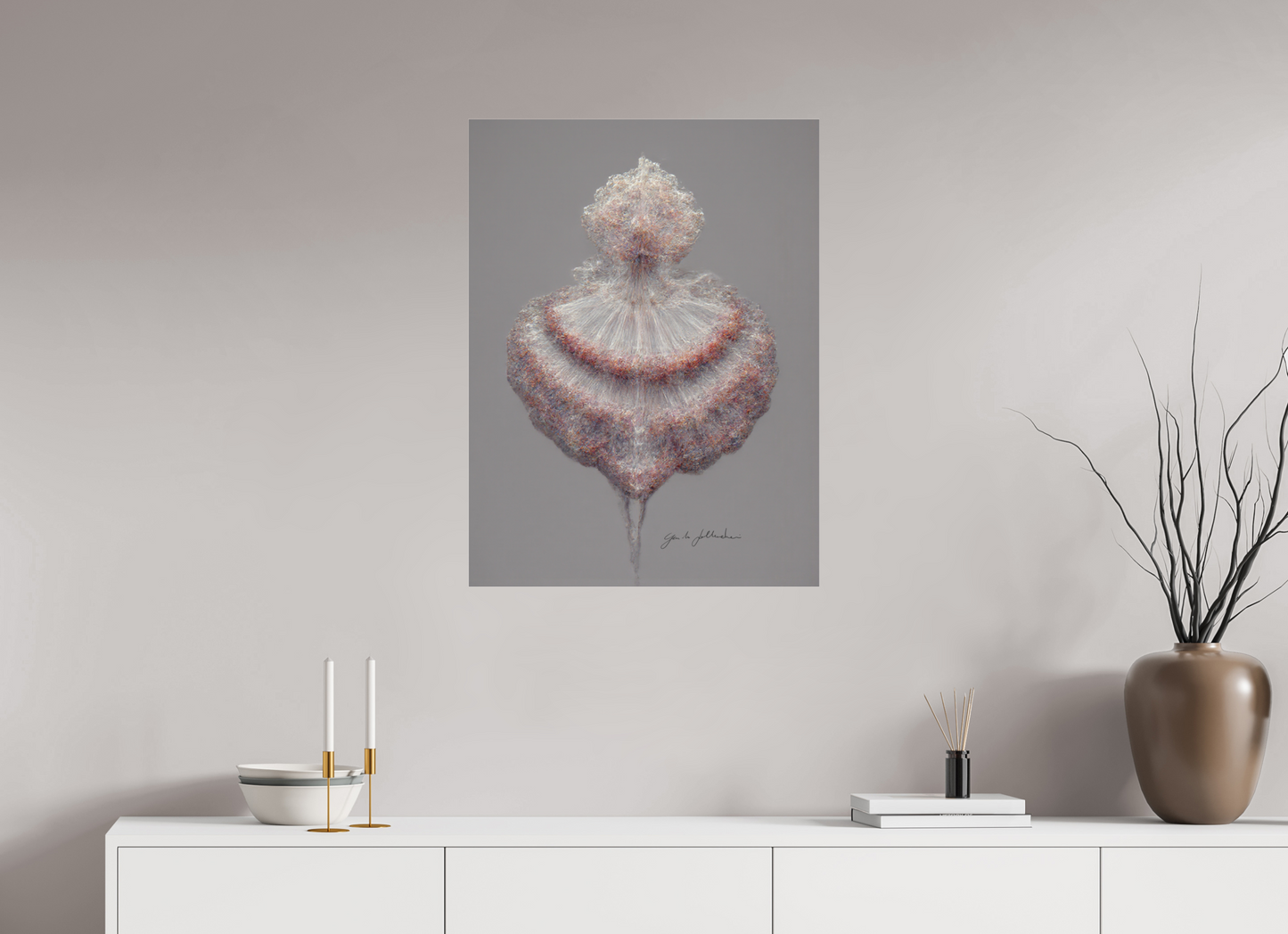
An invitation to look slowly
These works are designed to reward repeated viewing. They change as you move. They hold traces of their making. They ask you to notice the difference between an image that lives on a screen and an image that has entered matter.
Printing & Shipping. Acrylic glass and paper editions are produced by WhiteWall, a master fine-art lab based in Germany, and shipped worldwide. Each work carries the artist's digital signature. A signed and dated Certificate of Authenticity is available on request, issued by the artist via email and verified against your order receipt. Etchings are hand-pulled in the studio on the artist's press and shipped directly by the artist.
About the work. Each piece in the Pentimento series begins as a digital composition generated through a custom-trained model and is translated into a physical artwork — printed, pressed, or worked by hand. The aim is not reproduction but re-authoring: the image enters matter, gains light, depth, and surface, and becomes something a screen cannot hold.